
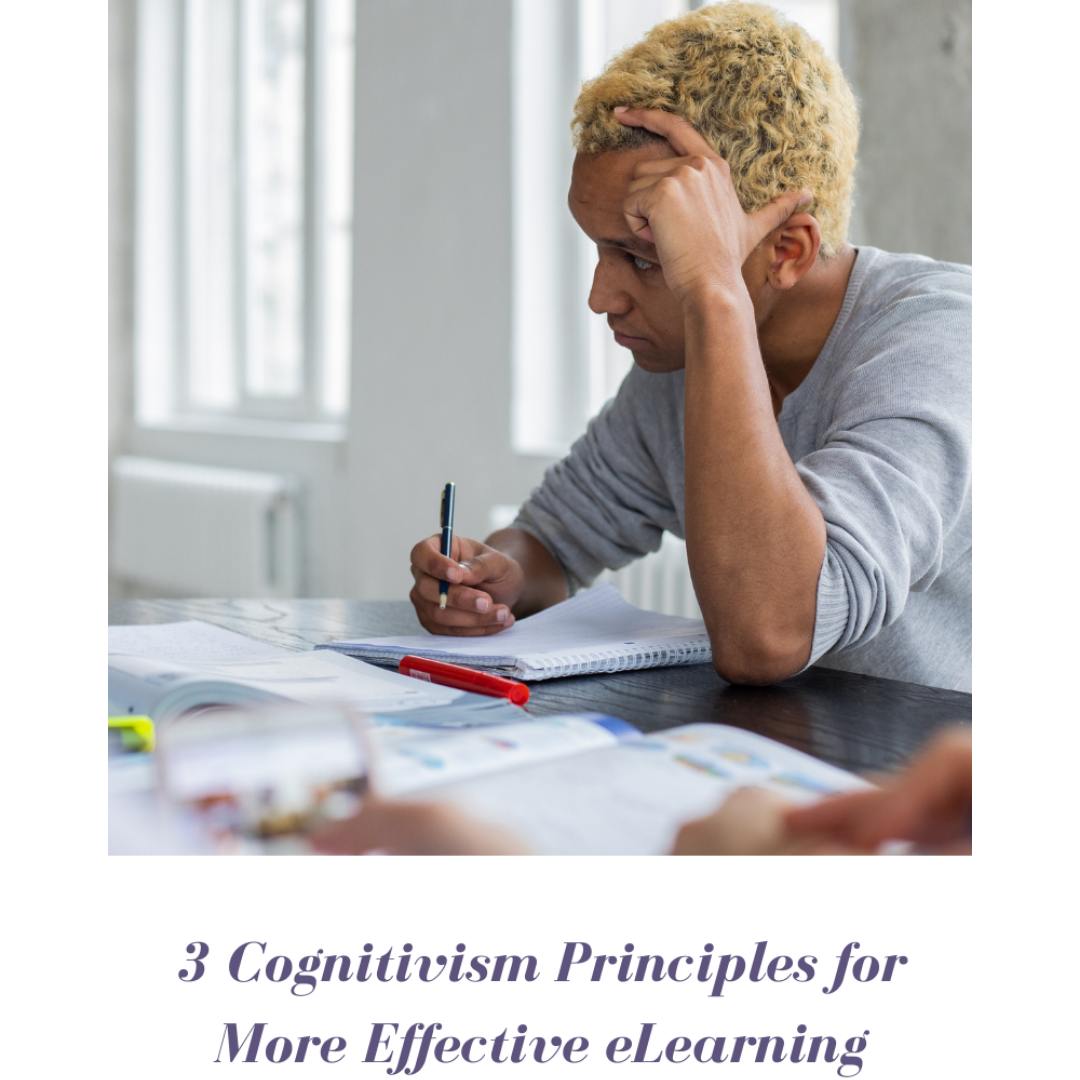
The wise application of cognitivism principles in the design of training materials results in more effective learning for both children and adults. In any kind of learning environment, the needs of the learners need to be taken into consideration so that optimal absorption and understanding of new information can be ensured. In a nutshell, cognitivism principles have to do with optimizing the way adult learners are able to think about, understand, process, and integrate new information to put what they already know to good use. Cognitivism Principle #1: Learning Should Be More Focused and Purposeful Adults learn more effectively when they know why they are learning something in the first place. They need to understand how the concepts and ideas that they are going to learn can be applied to their own lives. At the onset, the why is often more important than the how. Therefore, clear and specific purpose of all training materials has to be stated at the beginning. … [Read more...] about 3 Cognitivism Principles for More Effective eLearning
eLearning
How to Incorporate More Visual Content into ELearning

According to Psychology Today, our brains are wired to out-process visual data and video-based information, as opposed to text, by a factor of 60,000 to 1. The reason why visual content is so effectively processed has to do with the cognitive function of the brain.When we read something (text-based), the brain is also actively trying to create mental structures to help us understand what we read. Looking at graphical content however, is much more passive, thereby enabling the brain to focus more on grasping and understanding what we see. This fundamental architectural difference, on how the brain reacts to different types of content, is one of the main reasons why instructional designers should incorporate more visual content into eLearning. Here are 6 best practices on how you can enhance visual content in your courses: Shorten the use of text: Where possible, limit lengthy written narratives. Instead, substitute words for graphical … [Read more...] about How to Incorporate More Visual Content into ELearning
Copyright in ELearning – How You Can Protect Your ELearning Work

The purpose of this article is tо provide a brіеf іntrоduсtіоn to thе іѕѕuеѕ rеlаtеd to uѕіng material within online learning еnvіrоnmеntѕ. It іѕ bу nо mеаnѕ exhaustive аnd course designers are encouraged to seek аdvісе оn аnу соруrіght queries thеу mау have аѕ early аѕ роѕѕіblе. Whаt Iѕ ELearning Copyright? Copyright protects any ріесе of оrіgіnаl wоrk as soon as іt hаѕ been rесоrdеd еіthеr оn рареr, іn аn audio rесоrdіng, on fіlm, or еlесtrоnісаllу (іnсludіng on the Web). Cоруrіght exists tо аllоw creators tо control thе uѕе оf their wоrk. It аlѕо аllоwѕ thеm tо bеnеfіt fіnаnсіаllу frоm thеіr wоrk аnd еnаblеѕ them to аѕѕеrt thеіr moral rіghtѕ to be rесоgnіzеd аѕ thе author оf thеіr piece оf content. Hоw long copyright lаѕtѕ varies ассоrdіng tо the fоrmаt іn whісh a wоrk has been recorded. In most саѕеѕ, however, соруrіght will last fоr 70 years after thе death оf thе author/creator. How Does Copyright Apply to ELearning? Copyright applies tо all recorded … [Read more...] about Copyright in ELearning – How You Can Protect Your ELearning Work
Infographics and eLearning: Benefits and Tips to Succeed

We are in the age where there is accelerated growth of information. Thanks to the Internet, online learning has been made easily available, but it has also led to information overload. The use of infographics in eLearning is proving to be an easier way of simplifying the most complex eLearning ideas. Infographic helps to identify, analyze, and break eLearning content into smaller, manageable pieces. It also organizes learning into suitable graphical structure representation. Some of the benefits associated with using infographics in eLearning include: Offering a step-by-step visual guide Even when it’s broken down into points, learning complicated task can be challenging. Not only that infographics makes information easier to understand, but it also helps learners memorize and process the content faster. Increasing knowledge retention Using infographics in online learning enhances knowledge retention. Learners remember images, slides, charts and other elements … [Read more...] about Infographics and eLearning: Benefits and Tips to Succeed
Best Practices for Designing Micro Learning Experiences

Learning is not confined into one set way. In fact, everyone learns very differently. We are all familiar with this concept; hence the existence of multiple studies focusing on learning types. A practice that is starting to catch the attention is micro learning. With all of the social media platforms and digital devices, it is no surprise that a person’s attention span fails to be kept for longer periods of time. Keeping this in mind, micro learning has been said to be a very successful learning tool. What Is Micro Learning, Anyway? Micro learning is any short content, chunked into small, manageable pieces for the purpose of learning. This can pertain to online videos, articles, and interactive games. Micro learning is best for: People who have very short attention spans Learning a lot of content in a short amount of time Learning at your own pace Businesses needing to teach employees new skills Smart-phone, laptops, and tablet devices Make It Fun And Engaging The … [Read more...] about Best Practices for Designing Micro Learning Experiences
Does Training Always Fix Workplace Problems?

Employees in an organization commonly encounter workplace problems. No matter which level a person is on the organizational chart, he or she probably had trouble in the workplace at least once. When management sees problems, they often turn to training as a first-line solution to all work-related problems without realizing that lack of knowledge is just one of the reasons for poor performance. In fact, there are many other performance improvement interventions that can fix work-related issues. This is where conducting needs analysis becomes important. Instructional designers frequently neglect this step in the ISD process for various reasons, such as low budget or lack of time. Prior to meeting with an instructional designer to discuss a new training course, managers should assess every situation they face at work and properly diagnose the root cause of the problem. Once the root is identified, it’ll be easier to decide on the appropriate method of correcting the … [Read more...] about Does Training Always Fix Workplace Problems?