

As eLearning course writers, many of us may think we have a “routine” to create highly effective courses down pat. However, over time, we tend to take some of the basics of efficient course writing for granted. In due course, we may even prefer short-cuts, like diving directly into Storyboarding - instead of doing some analysis and planning upfront. Here are four proven secrets (more like best practices, actually!) for writing highly effective eLearning courses. Newcomers to the field will especially benefit from these tips because not only will they aid in producing engaging content, but will also bring efficiency into the course writing process: Secret#1 - Storyboarding: Your course blueprint Storyboards are critical elements of the design process for the eLearning project. They form the building blocks over which instructional designers create the detailed structure of the course. So, why use templates? Because they…: simplify the process of course design add an element of … [Read more...] about 4 Proven Secrets for Writing Highly Effective ELearning Courses
Instructional Design and ELearning
Blended Learning Solutions: Organizational benefits and pitfalls

In a world where we are all focused on everything “on-demand”, blended learning solutions offer a refreshing compromise for learners, training professionals and instructional designers alike. However, like every corporate training strategy available, blended learning comes with a unique set of pluses and pitfalls that organizations should be aware of. Understanding Blended Learning To make the most of what it has to offer, you need to understand what it means to blend instructional approaches as part of your overall organizational training strategy. Blending is a hybrid approach to training, where on-demand training (delivered via a combination of methods including virtual labs, videos, and podcasts) and instructor-led teaching are fused together into a coherent and unified training strategy. Parsing this description further, we need to understand that: Blended learning is not the same as using instructional videos or online content for in-class/in-person training Neither is it … [Read more...] about Blended Learning Solutions: Organizational benefits and pitfalls
The 10-step Blueprint for Creating Successful Digital Learning Content
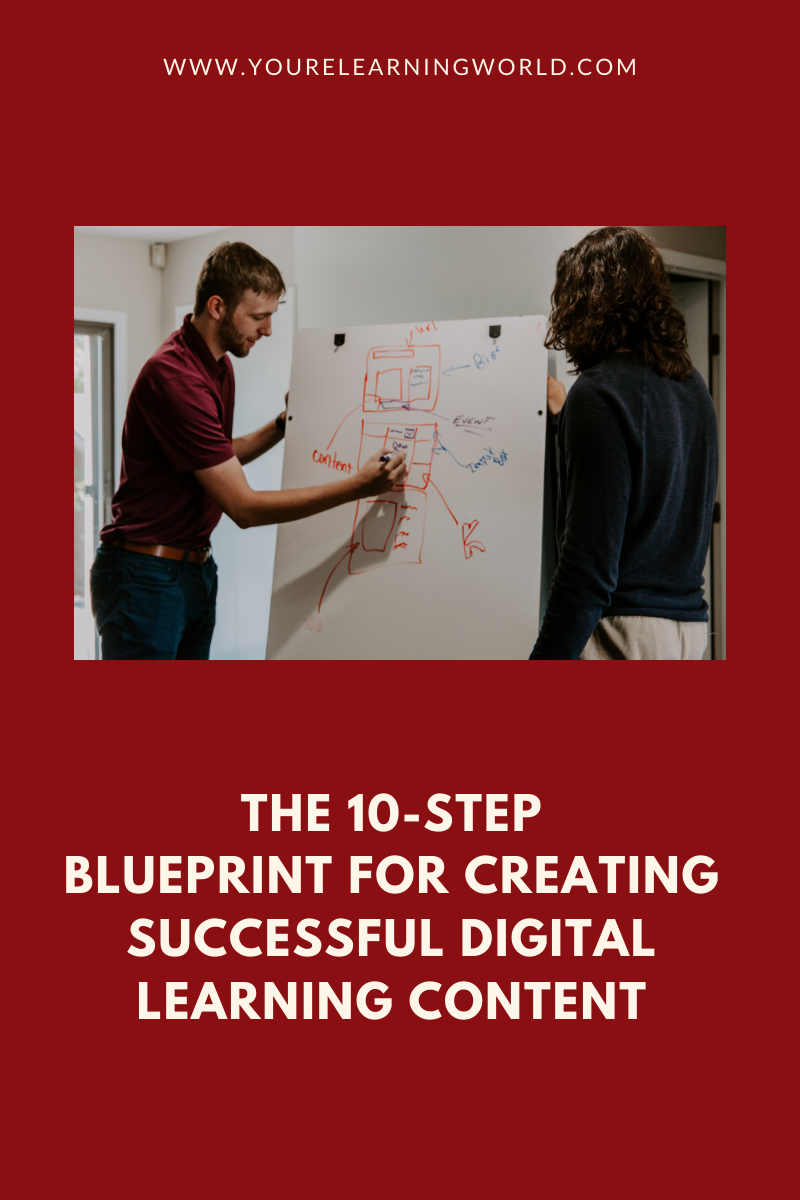
Whether you are producing online How-To guides for corporate clients, DIY Instructional content as a freelancer, eLearning courses for adult learners or other digital educational media for your employer, your objective is likely the same: To successfully engage, educate, and enlighten your audience. And to do that, you need to produce equally engaging and informative content. If learners don’t find your content appealing, they’ll likely tune-out within the first few minutes of the course. So, how does one create successful digital learning content and eLearning courses? Read on to discover a 10-point blueprint to doing it right. The 10-Step Blueprint In digital learning terms, success is about learners consuming your content, and whether they (eLearners and digital content consumers) accomplish their learning objectives as a result. If you meet those two criteria with your content, your audience, clients and other stakeholders will deem your courses a success. Use the following … [Read more...] about The 10-step Blueprint for Creating Successful Digital Learning Content
How To Create Next Generation ELearning

Way back in October 1999, during a seminar on Computer Based Training (CBT) in Los Angeles, a new phrase was introduced to the audience for the very first time – eLearning. Back then, while Internet access to the masses was restricted, training course developers (mostly programmers and IT professionals) still managed to produce eLearning courseware accessible through intranet, CD-Rom, and – to a lesser extent, via a handful of websites. Today, with instant communication available to the masses and cloud-based learning on the rise, the next generation of eLearning is poised for takeoff. In this article, we’ll talk about what it will take to create next-generation eLearning. Guiding Principles On How To Create Next Generation eLearning The next generation of eLearning will be based on an eclectic view of learning, and not focused on single viewpoints such as socio-constructivism or behaviorism. The guiding principles for an eclectic-focused eLearning environment of the future will, … [Read more...] about How To Create Next Generation ELearning
Types of Learners: Understanding learning styles and what they mean to eLearning designers

Learning styles refer to a diverse set of theories that attempt to identify various types of learners and explain the differences in how individuals learn. The underlying view of these theories is that individuals learn differently and that one can categorize learners by their learning styles. Learning styles and what they mean to eLearning designers ELearning designers can learn a lot by understanding the types of learners for whom they are developing learning content. However, instructional designers must bear in mind that the theorists themselves have differing opinions about how to define learning styles, and how to classify learners. Knowing the learning styles and types of learners an eLearning designer is catering to can help in tailoring pedagogical approaches for that specific audience. eLearning designers can also maximize learning outcomes by using design elements and learning tools that coincide with the learning styles and preferences that learners (or at least the … [Read more...] about Types of Learners: Understanding learning styles and what they mean to eLearning designers
Leveraging Gagné’s Nine Events of Instruction

Robert Gagné put forward a unique set of events to help Instructional Designers create effective learning materials. His nine-event based system uses a behaviorist approach to guide Instructional Designers on creating content that can accomplish specific learning objectives set for learners. As eLearning content designers, you can leverage Gagne’s Nine Events Of Instruction to produce highly engaging and motivational courses. Here are some thoughts and guidelines on how you can achieve that. Creating Engaging eLearning Content: Leveraging Gagne’s Nine Events Of Instruction At their very basic, Gagné’s Nine Events Of Instruction can help eLearning professionals achieve the following goals: Help your audience relate to the content you are delivering by associating it with prior knowledge or experiences. Offer supporting online content (prompts, hints, flashcards, cues) in the form of building blocks for the new information you are delivering. Pose probing … [Read more...] about Leveraging Gagné’s Nine Events of Instruction