

Nowadays, most people own at least one mobile device. As a result, mobile learning is fast gaining popularity not only because it is cheap and convenient but also because it is one of the preferred methods among most people. Many companies, organizations, government agencies, and educational institutions have already embraced MLearning. While there are both advantages and disadvantages of mobile learning, the benefits clearly outweigh the challenges. The main benefit of mLearning is that it allows people to turn otherwise downtime into more productive time. For instance, people can take mobile courses while driving or cooking dinner. As instructional designers develop mobile learning solutions, they should realize that not all types of courses are suitable for mobile delivery. Learning aids using mobile devices have been found to be most effective for: Just-in-time (JIT) learning Review and Refresher training Access to Flash Cards and Reminders Evaluation and … [Read more...] about How Mobile Learning Can Help Your Organization?
Instructional Design and ELearning
Instructional Design for ELearning book is now available on Kindle
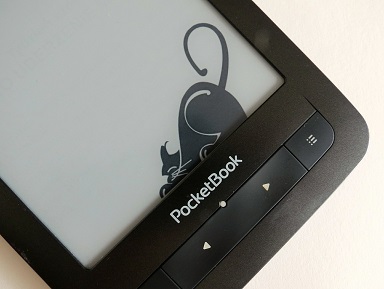
I am happy to announce that my book Instructional Design for ELearning: Essential Guide to Creating Successful ELearning Courses is now available on Kindle (http://amzn.to/1eVQbsz). This means that even more eLearning professional will be able to purchase and read it. Here are some of the testimonials and comments I received from those who had a chance to read the book: This book is a must read for eLearning designers! The organizational structure, real-world examples, and visual features transform the book into a valuable learning resource. — Vickie Williams, Ph.D., Director of Student Services, Educational Psychologist, Lecturer, University of Maryland, Baltimore County. This book is packed with practical exercises and clear examples. I consider the Instructional Design for ELearning text a strong contribution to the field of instructional design. — K.S., Senior Instructional Designer. Instructional Design for ELearning: Essential guide to creating successful eLearning courses … [Read more...] about Instructional Design for ELearning book is now available on Kindle
9 Books That Every ELearning Professional Must Read

ELearning professionals constantly look for ways to increase their knowledge about instructional design and eLearning topics. Below are some resources that, I think, should be added to the library of any learning and performance professional. ELearning and the Science of Instruction. Proven Guidelines for Consumers and Designers of Multimedia Learning. by Ruth C. Clark and Richard E. Mayer 3rd edition Design For How People Learn (Voices That Matter) by Julie Dirksen e-Learning by Design by William Horton E-Learning Uncovered: From Concept to Execution by Desiree Ward and Diane Elkins ISD From the Ground Up: A No-Nonsense Approach to Instructional Design by Chuck Hodell, 3rd Edition Visual Language for Designers: Principles for Creating Graphics that People Understand by Connie Malamed Graphics for Learning: Proven Guidelines for Planning, Designing, and Evaluating Visuals in Training Materials by Ruth C. Clark and Chopeta Lyons Evidence-based ELearning by Ruth C. … [Read more...] about 9 Books That Every ELearning Professional Must Read
4 Most Popular Instructional Design And ELearning Models
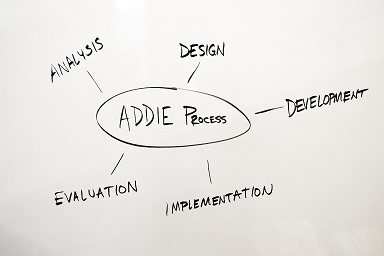
While there are as many instructional design theories and models, top instructional designers do not adhere to any one of them, but instead choose the model that best suits the specifics of a course’s audience and content. In this post, I will briefly cover some of the most popular models that instructional designers use. ADDIE ADDIE is the classic model. ADDIE stands for Analysis, Design, Development, Implementation, and Evaluation. In the Analysis phase, instructional designers clarify problems, define goals and objectives, and collect necessary data. In the Design phase, they write objectives, and create the structure and sequencing of the course. At the end of this phase, they will have a blueprint for the course and its delivery methods. In the Development phase, instructional designers bring their design to life by assembling all the course elements into a compelling eLearning module. Just like the name suggest, in the Implementation phase, the course is delivered to its … [Read more...] about 4 Most Popular Instructional Design And ELearning Models
What Are The Advantages Of Synchronous And Asynchronous ELearning That Most Clients Don’t Know

Today, I want to talk about synchronous vs. asynchronous eLearning. Most clients who request eLearning courses are unaware of these two options. Furthermore, most of the time, they seem to think that asynchronous is the way to go. However, this is not always true. Before deciding on the delivery method, instructional designers should look at the advantages and disadvantages of both options. Asynchronous eLearning allows people to take courses at any place at their own time and pace. Synchronous eLearning, on the other hand, requires an instructor and occurs in real time. In other words, synchronous eLearning is similar to a regular classroom experience except learners can take courses at any place, assuming a computer and Internet connection are available. When it comes to learners’ preferences, the best delivery method often depends on their learning styles. Younger generations tend to enjoy asynchronous courses better because they are so used to all the “clicking” on … [Read more...] about What Are The Advantages Of Synchronous And Asynchronous ELearning That Most Clients Don’t Know
What Is The Real Value Of Instructional Design?

You will be surprised how many people do not know what instructional design is. And even those who do often underestimate its value. If I ask you why we need instructionally sound training courses, you will probably respond by saying that training helps people acquire the knowledge and skills necessary to successfully perform their jobs. However, the true reason for training goes beyond that. A person can certainly acquire new knowledge and skills by reading a book on the topic or spending a day or two doing Internet search, gathering data, and acquainting his or herself with the content. Nowadays, people can learn almost anything without ever leaving their houses. They can download books, print articles, take free courses, and even watch videos completely free of charge. Informal learning is becoming a popular training solution for many organizations because it is cheap, can be done in people’s free time, and does not require many resources. Managers often assume their employees … [Read more...] about What Is The Real Value Of Instructional Design?