
The move to online learning has altered the educational landscape, offering more flexibility than ever. But with that flexibility comes a challenge—how do professors establish a strong, engaging presence when students aren’t physically in the same room? In asynchronous online courses, where students engage with the material at their own pace, the role of instructor presence becomes even more critical. It’s not just about posting lectures or assignments; it’s about creating an environment where students feel supported, motivated, and connected to both the content and the instructor. So, how do you build that presence? We’ll discuss four practical strategies that do just that!
1. Set the Tone Early: Create a Warm, Welcoming Environment
Your first impressions matter, even in an online class. When students initially log into an online course, they meet a virtual classroom that feels impersonal. As instructors, it’s essential to set the tone from the very start. Your welcome message should be personal, warm, and inviting. Think about how you’d greet a student in a physical classroom—then bring that energy online.
I’ve found that a short video introduction can make all the difference. It allows students to hear your voice, see your face, and get a sense of your personality. It’s also an opportunity to outline your course structure, set expectations, and explain your availability. A simple, “I’m here to support you” can go a long way in making students feel comfortable reaching out with questions.
Don’t forget the course content either—structure it clearly and logically. Make navigation intuitive so that students don’t feel lost. Platforms like Canvas and Moodle offer great ways to organize content, but it’s up to you to make it easy for students to engage with the material without getting overwhelmed.
For some inspiration, check out some online course introduction videos from Ohio State’s Digital Learning & Innovation Center. It has a clear, welcoming interface, and you can get a sense of how they manage their course introductions.
2. Engage Through Meaningful Interaction
Asynchronous doesn’t mean “without interaction.” In fact, the absence of face-to-face time offers a greater need for more expressive and frequent interactions. These exchanges can take many forms—discussion boards, email, video feedback on assignments, and even weekly “office hours” via videoconferencing.
One important thing to remember is the need for feedback. Students may not get instant reactions to their work like they would in a traditional classroom setting, but that doesn’t mean feedback isn’t critical. When I started incorporating more regular, personalized video feedback for assignments, I noticed students were more engaged. It’s not just about giving grades—it’s about demonstrating that you care enough to take the time to comment on their progress and help them improve.
Discussion boards are another critical tool for instructor presence. They’re not just for students to interact with each other, but for you to jump in with thoughtful responses, further questions, or clarifications. This is where your voice can shine. Don’t just leave nonspecific “Good job!” comments. Dive deeper into the topics, pose supplementary challenges, or offer your own experiences and insights. This fosters a sense of dialogue, even if it’s happening at different times.
Real-world example: The University of Edinburgh uses discussion boards effectively in its online courses. Their professors are highly interactive in the forums, enabling students to feel like they’re partaking in an ongoing conversation rather than just responding to a prompt.
3. Foster a Sense of Community and Belonging
One of the biggest challenges of asynchronous online courses is contending with the isolation that many students feel. Without face-to-face contact, students might grapple with a sense of disconnection. It’s up to you, as the instructor, to create an environment where they feel like part of something bigger than just the course materials.
Think about how you can build community in your course. Start by motivating students to introduce themselves in an imaginative way—maybe with a short video or by sharing a fun fact about themselves. Then, continue to weave opportunities for students to interact with each other throughout the course. Group projects, peer reviews, or collaborative discussions can go a long way in making students feel more connected. In my courses, I also make it a point to highlight student achievements in a public way, whether that’s by featuring a great post in the discussion forum or recognizing a student’s progress in a weekly newsletter. It lets students know that their contributions matter and that they’re seen.
Additionally, try to model the behavior you want to see from your students. Share your own experiences, ask questions, and express vulnerability. If you share a personal story or a challenge you’ve faced in your own learning journey, it helps break down the barrier between “professor” and “student.” It humanizes the experience and creates a more relatable dynamic.
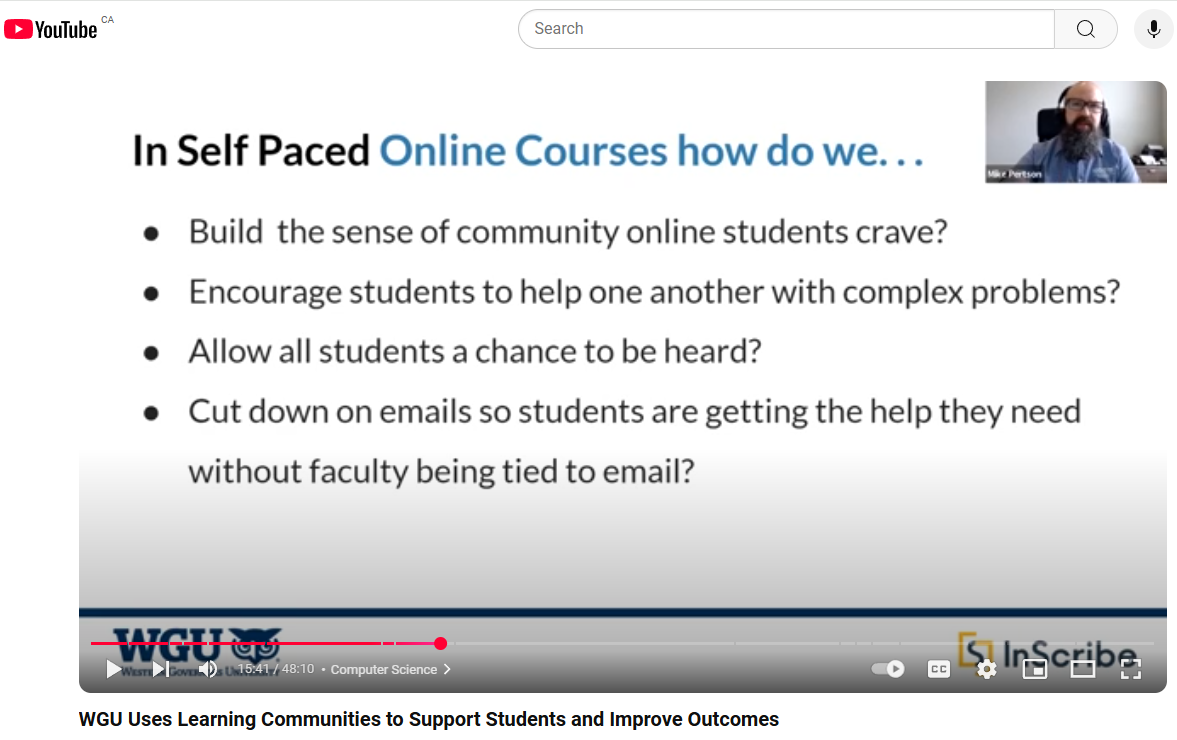
To see how others are doing it, check out Western Governors University. Their research, related to “Belonging in an online learning environment” does a fantastic job of helping to create a tight-knit online community through student forums and peer support systems.
4. Leverage Technology to Stay Present and Accessible
In today’s digital world, you’ve got a ton of tools at your disposal to keep in touch with students. Use them. Whether it’s through video feedback, real-time office hours via Zoom, or course announcements through platforms like Slack, staying accessible and responsive is key.
In my own teaching, I use a mix of asynchronous and synchronous tools. For example, I frequently post a video addressing common questions that came up in the forums, followed by a short live Q&A session. This combination allows students to engage with content in their own time, but also provides a space where they can ask questions and get instant responses. It’s an approach that balances flexibility with a sense of real-time connection.
A lot of courses are also integrating AI-enabled chatbots for immediate responses, especially in large classes, including Georgia State University (“Pounce“), Arizona State University (“Sunny“), University of Michigan-Flint (“Maizey“), MUST University (“Owlie“), and Walden University (“Julian“).

While they can’t replace human interaction, they can offer quick answers to common queries, leaving you with more time to focus on the personalized support that truly matters.
Georgia Tech’s online courses offer a great example of leveraging technology to stay connected with students. They offer everything from automated reminders to virtual meetups, keeping students engaged and informed.
Conclusion: Building Instructor Presence is All About Connection
Creating instructor presence in asynchronous online courses isn’t about being everywhere at once or constantly overloading your students with content. It’s about making sure your students feel supported, heard, and encouraged to participate. By setting a welcoming tone, engaging meaningfully, fostering a sense of community, and leveraging the right tools, you can create an environment where students thrive, even in the absence of physical presence.
As you continue to build your own online courses, remember: students are not just engaging with material, they’re engaging with you. Your presence matters—maybe now more than ever. So be intentional about creating a space where they can learn, grow, and feel part of a community. You’ll not only help them succeed academically, but you’ll also leave a lasting impact on their learning experience.


Leave a Reply